PSD: 36%
PS: 29.6%
CDS-PP: 12%
CDU: 8.5%
BE: 6.9%
Source.
sexta-feira, março 16, 2012


terça-feira, março 13, 2012
Polls in Portugal since the June 2011 elections
With the latest Aximage poll, this is where we stand in terms of voting intentions since the June 2011 elections. A linear trend instead of fancier stuff just seemed simple and informative enough.

Bad news for the President too. At Aximage, 60% disapproval. In the latest Marktest, 61% disapproval. Yikes! In the latest Eurosondagem, much better, but still declining pretty steeply. Sure, everybody in power suffers with a bad economy, but it's clear that there's more to this.

Bad news for the President too. At Aximage, 60% disapproval. In the latest Marktest, 61% disapproval. Yikes! In the latest Eurosondagem, much better, but still declining pretty steeply. Sure, everybody in power suffers with a bad economy, but it's clear that there's more to this.
segunda-feira, março 12, 2012
Elections in Europe since 2004
This is from a paper I'm still writing with Josep Colomer, but the figures seemed so interesting I couldn't resist sharing them even before the paper's finished. Here's the relative change for the party of the incumbent Prime Minister in comparison with the previous election, for all legislative elections from 2004 to 2011 in all EU27 + Iceland and Croatia.

And this is the same splitting the PM's parties in Left (<5) vs. Right (>5), on the basis of 0-10 expert scores that can be obtained in the Parlgov website.


And this is the same splitting the PM's parties in Left (<5) vs. Right (>5), on the basis of 0-10 expert scores that can be obtained in the Parlgov website.

sexta-feira, março 02, 2012
Finally, a clear and objective explanation of the Portuguese economic crisis
"Labour and capital were diverted into activities, such as law, construction, health and government, that are sheltered from foreign competition. The number of lawyers increased by 48% between 2000 and 2010. The public sector grew fast. 'All these people went to study film-making and sociology and then got jobs with the government,' says Pedro Santa Clara of Lisbon’s Nova University. Productivity stagnated."
You can find this and more in an obscure publication called The Economist. Let's hope this sociology and film-making people getting government jobs problem is addressed in a revised version of the Troika memorandum.
You can find this and more in an obscure publication called The Economist. Let's hope this sociology and film-making people getting government jobs problem is addressed in a revised version of the Troika memorandum.
quinta-feira, março 01, 2012
Killing time on election nights.
segunda-feira, fevereiro 13, 2012
PSD and PS in the polls
Three new polls since the last time we looked at this: from Marktest, Aximage, and Eurosondagem.

The advantage of the PSD over the PS is now estimated at 7.5 points by Aximage (down from 8.2 in January), at 12.4 points by Marktest (down from 25.7 in November) and at 5 points by Eurosondagem (down from 6.1 in January).

The advantage of the PSD over the PS is now estimated at 7.5 points by Aximage (down from 8.2 in January), at 12.4 points by Marktest (down from 25.7 in November) and at 5 points by Eurosondagem (down from 6.1 in January).
sexta-feira, fevereiro 10, 2012
Yet another piece of the Greek puzzle
Latest polls in Greece:
Epikaira (comparison with last election result):
New Democracy: 30.5% (-3)
PASOK: 12% (-32.1)
Laos: 6% (+0.4)
Democratic Left: 13% (new party)
KKE: 12.5% (+5)
Coalition of the radical left: 12.5% (+7.9)
Skai/Ekathimerini (comparison with last election result):
New Democracy: 31% (-2.5)
PASOK: 8% (-35.9)
Laos: 5% (-0.6)
Democratic Left: 18% (new party)
KKE: 12.5% (+5)
Coalition of the radical left: 12% (+7.4)
Chrysi Avgi: 3% (+2.5)
12% for PASOK would be the worst result for the Socialists ever, even worse than the 13.6% of the 1974 elections, the first after the end of the military junta. In these polls, the parties to the left of PASOK represent about 40% of the vote. And Chrysi Avgi is, well, this.
Epikaira (comparison with last election result):
New Democracy: 30.5% (-3)
PASOK: 12% (-32.1)
Laos: 6% (+0.4)
Democratic Left: 13% (new party)
KKE: 12.5% (+5)
Coalition of the radical left: 12.5% (+7.9)
Skai/Ekathimerini (comparison with last election result):
New Democracy: 31% (-2.5)
PASOK: 8% (-35.9)
Laos: 5% (-0.6)
Democratic Left: 18% (new party)
KKE: 12.5% (+5)
Coalition of the radical left: 12% (+7.4)
Chrysi Avgi: 3% (+2.5)
12% for PASOK would be the worst result for the Socialists ever, even worse than the 13.6% of the 1974 elections, the first after the end of the military junta. In these polls, the parties to the left of PASOK represent about 40% of the vote. And Chrysi Avgi is, well, this.
segunda-feira, janeiro 23, 2012
PSD and PS in the Portuguese polls
So few polls have been conducted in the more than 6 months since the general election in Portugal that one has to feel discomfort in analyzing them. And yet, two things seem relatively clear: in spite of dramatic austerity policies, PSD retains lead; and in spite of retaining lead, such lead is clearly diminishing. I guess you can take this and spin it as you prefer.

Data taken from here.

Data taken from here.
quinta-feira, janeiro 19, 2012
Experiência
Daqui a minutos deve estar a começar a minha apresentação na conferência sobre os resultados do Barómetro da Qualidade da Democracia, no ICS. Especulo, porque não estou lá, mas sim em Washington. Mas vou apresentar na mesma, assim:
Quem não puder lá estar e tiver interesse, aproveite. O som da minha voz é-me quase intolerável e foi das coisas que mais me custou fazer na vida. Mas por outro lado, se correr bem, é bem possível que nunca mais compareça fisicamente a uma conferência.
quarta-feira, janeiro 18, 2012
Gustav Leonhardt, 1928-2012
O primeiro CD que comprei na minha vida foi este, talvez 1984. Calhou ter entrado no Bach com a ajuda dele, e não calhou nada mal. A partir daí nunca mais os larguei, um e outro. Se houver paraíso estão a conversar sobre fugas ou afinações.


terça-feira, janeiro 10, 2012
Conferences
In January 19th, the Barometer of the Quality of Democracy in Portugal holds its third conference, presenting a series of papers on the subject, partially based on a survey conducted last July.
And by the way, later in the year (April 17th-18th), the Department of Government of Georgetown University and the BMW Center for German & European Studies are organizing a conference on "Crisis, Voting, and Protesting in Europe", with a special focus on Spain, Portugal, Greece, Iceland, Ireland, and Italy, part of a series of conferences and events entitled The Political Consequences of Economic Crisis.
And by the way, later in the year (April 17th-18th), the Department of Government of Georgetown University and the BMW Center for German & European Studies are organizing a conference on "Crisis, Voting, and Protesting in Europe", with a special focus on Spain, Portugal, Greece, Iceland, Ireland, and Italy, part of a series of conferences and events entitled The Political Consequences of Economic Crisis.
sexta-feira, dezembro 23, 2011
quinta-feira, dezembro 22, 2011
Funniest bit so far in Kahneman's "Thinking, Fast and Slow"
"One day in the early 1970s, Amos handed me a mimeographed essay by a Swiss economist named Bruno Frey, which discussed the psychological assumptions of economic theory. I vividly remember the color of the cover: dark red. Bruno Frey barely recalls writing the piece, but I can still recite its first sentence: 'The agent of economic theory is rational, selfish, and his tastes do not change.'
I was astonished."
Thinking, Fast and Slow, p. 261.
segunda-feira, dezembro 19, 2011
Havel, Soares, and a Renault 21
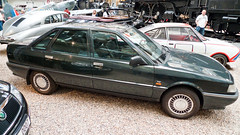
"A short while later I’m standing at the entrance to the Street of the Alchemists — the street where Kafka used to write, in the heart of the Hradcany. I’m watching a bizarre little scene as Vaclav Havel’s chauffeur drives the Presidential limousine slowly across the same, small square I walked across when I was here three years ago. The chauffeur is using the big, black official car — a Russian Zil — to brush back a crowd of reverent tourists who are trying to touch Havel’s little Renault, a personal gift from President Mario Soares of Portugal. The chauffeur drives the Zil slowly but firmly into the knot of visitors until they disperse, then he backs the limo across the square to its parking place and sits there waiting until he has to do it all over again. The Presidential chauffeur has little else to do, for Havel doesn’t travel in the Zil at all. He loves his little Renault and drives it himself. Someone has stuck a big red heart on its windshield, love-notes are scrawled in lipstick across the rear window, and affectionate messages are pasted down the Renault’s sides."
Here. The car is displayed at the National Technical Museum in Prague. The picture was taken from tauma's photostream in Flickr.
Combate de Blogs
O Combate de Blogs nomeou o Margens de Erro para a categoria "melhor blog individual" de 2011. Obrigado!


sexta-feira, dezembro 16, 2011
Hitch on Portugal 1974, from "Hitch-22: A Memoir" (2010)
"The cultural element made it seem as if the best of 1968 was still relevant. One of the precipitating prerevolutionary moments had been the publication of a feminist manifesto by three women, all of whom were named Maria, and 'The Three Marias' became an exciting example of what womanhood could do when faced with a theocratic oligarchy that had treated them as breeding machines not far advanced above the level of chattel. Sex, long repressed, was to be scented very strongly on the wind: I remember in particular the only partly satirical Movimento da Esquerda Libidinosa or “Movement of the Libidinous Left,” with its slogan “Somos um partido sexocrático,” whose evident objective was the frantic making-up of lost time. The best revolutionary poster I saw — perhaps the best I have ever seen — expressed this same thought in a rather less erotic way: it showed a modest Portuguese family in traditional dress, being introduced to a receiving line of new friends who included Socrates, Einstein, Beethoven, Spinoza, Shakespeare, Charlie Chaplin, Louis Armstrong, Karl Marx, and Sigmund Freud. (There are many people in much richer countries who are still putting off this rendezvous.)"

"The leader of the Socialist Party, Mario Soares, a man whom I would normally have regarded as a pallid and compromising Social Democrat, summarized the situation with some pith. I still have the question he put to me double-underlined in my notebook from Lisbon. 'If the army officers are so much on the side of the people, why do they not put on civilian clothes?' It was a question not just for that moment.
I began to be extremely downcast by the failure, or was it refusal, of my International Socialist comrades to see what was staring them right in the face. Intoxicated by the admittedly very moving attempts at personal liberation and social 'self-management,' they could not or would not appreciate how much of this was being manipulated by a dreary conformist sect with an ultimate loyalty to Russia. Thus I found myself one evening in late March 1975 at a huge rally in the Campo Pequeno bullring in Lisbon, organized by the distinctly cautious Socialist Party but with the invigorating slogan: 'Socialismo Si! Dictatura Nao! ' The whole arena was a mass of red flags, and the other chants echoed the original one. There were calls for the right of chemical workers to vote, a banner that read 'Down With Social Fascism' and another that expressed my own views almost perfectly in respect of foreign intervention in Portugal: 'Nem Kissinger, Nem Brezhnev!'
I took my old friend Colin MacCabe along to this event. For his numberless sins he was at the time a member of the Communist Party, and at first employed an old Maoist catchphrase — 'waving the red flag to oppose the red flag”— to dismiss what he was seeing. But gradually he became more impressed and as the evening began to crystallize he unbent so far as to say: 'Sometimes the wrong people can have the right line.' I thought then that he had said more than he intended, and myself experienced the remark as a sort of emancipation from the worry, which did still occasionally nag at me, that by taking up some out-of-line position I would find myself 'in bed with,' as the saying went, unsavory elements. It’s good to throw off this sort of moral blackmail and mind-forged manacle as early in life as one can.
The sequel takes very little time to tell: the Communists and their ultra-Left allies hopelessly overplayed their hand by trying for a barracks-based coup, the more traditional and rural and religious elements of Portuguese society rose in an indignant counter-revolution, a sort of equilibrium was restored and — e finita la commedia. The young radicals who had come from all over Europe to a feast of sex and sunshine and anti-politics folded their tents and doffed their motley and went home. It was the last fall of the curtain on the last act of the 1968 style, with its 'take your desires for reality' wall posters and its concept of work as play.
For me, it was also the end of the line with my old groupuscule. I had developed other disagreements, too, as the old and open-minded 'International Socialists' began to mutate into a more party-line sect. But Portugal had broken the mainspring for me, because it had caused me to understand that I thought democracy and pluralism were good things in themselves, and ends in themselves at that, rather than means to another end."
All the rest on Portugal is a good read, numerous Portuguese spelling mistakes and all.

"The leader of the Socialist Party, Mario Soares, a man whom I would normally have regarded as a pallid and compromising Social Democrat, summarized the situation with some pith. I still have the question he put to me double-underlined in my notebook from Lisbon. 'If the army officers are so much on the side of the people, why do they not put on civilian clothes?' It was a question not just for that moment.
I began to be extremely downcast by the failure, or was it refusal, of my International Socialist comrades to see what was staring them right in the face. Intoxicated by the admittedly very moving attempts at personal liberation and social 'self-management,' they could not or would not appreciate how much of this was being manipulated by a dreary conformist sect with an ultimate loyalty to Russia. Thus I found myself one evening in late March 1975 at a huge rally in the Campo Pequeno bullring in Lisbon, organized by the distinctly cautious Socialist Party but with the invigorating slogan: 'Socialismo Si! Dictatura Nao! ' The whole arena was a mass of red flags, and the other chants echoed the original one. There were calls for the right of chemical workers to vote, a banner that read 'Down With Social Fascism' and another that expressed my own views almost perfectly in respect of foreign intervention in Portugal: 'Nem Kissinger, Nem Brezhnev!'
I took my old friend Colin MacCabe along to this event. For his numberless sins he was at the time a member of the Communist Party, and at first employed an old Maoist catchphrase — 'waving the red flag to oppose the red flag”— to dismiss what he was seeing. But gradually he became more impressed and as the evening began to crystallize he unbent so far as to say: 'Sometimes the wrong people can have the right line.' I thought then that he had said more than he intended, and myself experienced the remark as a sort of emancipation from the worry, which did still occasionally nag at me, that by taking up some out-of-line position I would find myself 'in bed with,' as the saying went, unsavory elements. It’s good to throw off this sort of moral blackmail and mind-forged manacle as early in life as one can.
The sequel takes very little time to tell: the Communists and their ultra-Left allies hopelessly overplayed their hand by trying for a barracks-based coup, the more traditional and rural and religious elements of Portuguese society rose in an indignant counter-revolution, a sort of equilibrium was restored and — e finita la commedia. The young radicals who had come from all over Europe to a feast of sex and sunshine and anti-politics folded their tents and doffed their motley and went home. It was the last fall of the curtain on the last act of the 1968 style, with its 'take your desires for reality' wall posters and its concept of work as play.
For me, it was also the end of the line with my old groupuscule. I had developed other disagreements, too, as the old and open-minded 'International Socialists' began to mutate into a more party-line sect. But Portugal had broken the mainspring for me, because it had caused me to understand that I thought democracy and pluralism were good things in themselves, and ends in themselves at that, rather than means to another end."
All the rest on Portugal is a good read, numerous Portuguese spelling mistakes and all.
quarta-feira, novembro 30, 2011
Guillermo O'Donnell (1936-2011)
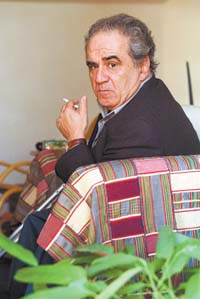
In 1998, I invited Guillermo O'Donnell and Richard Gunther for a conference at the Catholic University in Lisbon, in the context of their (slightly stingy) debate about "democratic consolidation". I was but a mere graduate student at the time, Richard was my adviser, but I had never met or contacted Guillermo before. Many people had warned me he was a bit of a grumpy character and tended to make intolerable demands concerning travelling. But to their (and my) surprise, he accepted immediately. The conference was very nice and Guillermo was nothing but delightful and kind, not to mention prodigiously brilliant. I met him (and his wonderful wife Gabriela) several times after that, including in an epic Club de Madrid meeting where I worked as his assistant. He was an academic giant, a true progressive democrat, a brave man, and a wonderful person.
Marktest, 15-19 Nov., N=804, Tel.
Voting intention:
PSD: 45.4% (+3.8)
PS: 19.7% (=)
CDU: 7.9% (-2.6)
CDS-PP: 5.0% (-0.3)
BE: 4.1% (-0.1)
Others+Blank: 17.9% (-0.8)
PM approval: 45.5% (up more than 9 pts from October). All results here.
PSD: 45.4% (+3.8)
PS: 19.7% (=)
CDU: 7.9% (-2.6)
CDS-PP: 5.0% (-0.3)
BE: 4.1% (-0.1)
Others+Blank: 17.9% (-0.8)
PM approval: 45.5% (up more than 9 pts from October). All results here.
segunda-feira, novembro 21, 2011
Spain: results, polls, and forecast
PP obtained 44.6% of the vote and 186 (53%) MP's, up 4.7 points in votes and 9 points in MP's in relation to 2008. The results basically match (slightly surpassing) those of 2000, when PP had obtained its first absolute majority, but are nonetheless the best results ever for the party. Still, expectations were for an even (slightly) better result. A simple and rough (not taking sample sizes into account) average of the very last polls (those whose fieldwork took place after November 7th) gave PP a 45.9% average. Fernández-i-Marín's more sophisticated approach generated the same average, with an interval between 45% and 46.8%.
PSOE obtained 28.7% of the vote and 110 (31.4% of) MP's, down more than 15 percentage points in votes and 17 points in MP's. It's the party's worst result ever. Although the debacle was predicted, somewhat better was expected. A simple average of the very last polls was 30.6%, Fernández-i-Marín estimated 31.1%, and our forecast based on May 2011 data estimated 34.5%. Of the 86 polls published since January 2011, only 4 estimated PSOE at 28.7% or less, and only one of them is recent (a study by the Ortega y Gasset Foundation).
IU obtained 6.9% of the vote and 3.1% of MP's, a definitive improvement over 2008 and the party's best result since 1996. Extremely close to what the polls suggested. CiU got 4.2% of the vote and 4.6% of MP's (better than expected on the basis of polls) and UPyD got 4.7% of the vote and 5 MP's (also better than what the last polls suggested). Overall, then, PP did slightly worse, PSOE rather worse, and smaller parties better than expected.
In 2008, PP and PSOE captured 83% of the vote and and more then 90% of MP's. Yesterday, they got 73% of the vote and 85% of MP's. Turnout decreased, from 74% to 72%.
PSOE obtained 28.7% of the vote and 110 (31.4% of) MP's, down more than 15 percentage points in votes and 17 points in MP's. It's the party's worst result ever. Although the debacle was predicted, somewhat better was expected. A simple average of the very last polls was 30.6%, Fernández-i-Marín estimated 31.1%, and our forecast based on May 2011 data estimated 34.5%. Of the 86 polls published since January 2011, only 4 estimated PSOE at 28.7% or less, and only one of them is recent (a study by the Ortega y Gasset Foundation).
IU obtained 6.9% of the vote and 3.1% of MP's, a definitive improvement over 2008 and the party's best result since 1996. Extremely close to what the polls suggested. CiU got 4.2% of the vote and 4.6% of MP's (better than expected on the basis of polls) and UPyD got 4.7% of the vote and 5 MP's (also better than what the last polls suggested). Overall, then, PP did slightly worse, PSOE rather worse, and smaller parties better than expected.
In 2008, PP and PSOE captured 83% of the vote and and more then 90% of MP's. Yesterday, they got 73% of the vote and 85% of MP's. Turnout decreased, from 74% to 72%.
sexta-feira, novembro 18, 2011
Eurosondagem, 10-15 Nov., N=1025, Tel.
PSD: 36.3% (-0.6)
PS: 29.6% (+0.4)
CDS-PP: 12.1% (-0.4)
CDU: 9.0% (+0.2)
BE: 6.1% (-0.2)
Here. Changes in evaluations of party leaders and institutions are equally small. Interestingly, leaders are mostly evaluated positively, while institutions are evaluated negatively (in the piece, there's a typo in the parliament's net evaluation result).
PS: 29.6% (+0.4)
CDS-PP: 12.1% (-0.4)
CDU: 9.0% (+0.2)
BE: 6.1% (-0.2)
Here. Changes in evaluations of party leaders and institutions are equally small. Interestingly, leaders are mostly evaluated positively, while institutions are evaluated negatively (in the piece, there's a typo in the parliament's net evaluation result).
Subscrever:
Mensagens (Atom)